
The concept of a"healthy weight range" has undergone a fascinating evolution in the medical and scientific community over the last decade. Gone are the days when a person's health was evaluated exclusively by an arbitrary and strict number marked by a traditional scale.
Today, we understand that the human body is an extraordinarily complex biological system. Metabolic health is the result of a dynamic interaction between your Body Mass Index (BMI), your body fat percentage, the amount of lean muscle mass you possess, and your overall psychological well-being. In this comprehensive, exhaustive, and evidence-based guide, we will break down with surgical precision what it truly means to be in a healthy weight range.
You will learn to evaluate your own body composition beyond outdated standards and, even more crucially, you will discover strategies based on the science of sports nutrition to achieve and maintain your physical goals sustainably, leaving extreme diets and the terrible rebound effect behind forever.
1. Height and Weight Chart for Healthy BMI Adults
The Body Mass Index (BMI) is, in all probability, the most well-known and widely used public health metric globally. Originally developed in the 19th century by the Belgian mathematician Adolphe Quetelet (and long known as the Quetelet Index), it is a surprisingly simple mathematical formula that relates your total body weight to your height.
For decades, prestigious medical institutions, including the World Health Organization (WHO) and the Centers for Disease Control and Prevention (CDC), have used this index as the epidemiological gold standard to categorize the weight of entire populations and establish correlations with life expectancy. The universal calculation is performed by dividing your weight expressed in kilograms by the square of your height in meters (kg/m²).
Official BMI Categories established by the WHO
| Diagnostic Category | BMI Range | Clinical Health Implications |
|---|---|---|
| Underweight | < 18.5 | Higher clinical vulnerability. Elevated risk of severe nutritional deficiencies, anemia, a weakened immune system, and early osteoporosis due to suboptimal bone density. |
| Normal / Healthy Weight | 18.5 – 24.9 | The"golden zone" or minimum risk zone. Statistically associated with the lowest probability of developing chronic, metabolic, and cardiovascular diseases in the long term. |
| Overweight | 25.0 – 29.9 | Moderate risk. Significantly increases the load on joints and elevates the incipient probability of developing insulin resistance and dyslipidemia. |
| Obesity (Class I, II, III) | ≥ 30.0 | Proven high clinical risk. Direct correlation with severe hypertension, type 2 diabetes mellitus, sleep apnea, certain types of cancer, and advanced metabolic syndrome. |
2. The Critical Limitations of BMI at an Individual Level
Although BMI is an exceptionally useful, inexpensive, and fast statistical tool for conducting large-scale epidemiological studies on millions of people, it has a critical structural flaw when applied strictly at an individual level: BMI is completely blind to true body composition.
The formula has no mechanism to distinguish between a kilogram of dense, metabolically active muscle tissue and a kilogram of stored adipose tissue (fat). This inherent limitation is exactly why an elite athlete, a natural bodybuilder, or even a regular gym-goer with a considerable amount of hypertrophied muscle mass can easily register a BMI of 28 or higher.
The Athlete's Paradigm: A False Positive
According to the strict traditional medical table, this muscular individual would be instantly classified as an"overweight" or even"pre-obese" person, despite having an athletic body fat percentage (single digits) and optimal cardiovascular health. Skeletal muscle is, by volume, 18% denser and heavier than fat tissue, which severely distorts the calculation in people who practice strength training.
Furthermore, BMI completely ignores a critical factor for longevity: body fat distribution. Two people can share an identical and"healthy" BMI of 24. However, one person might store their fat predominantly subcutaneously (under the skin, metabolically safe), while the other, seemingly slim, could suffer from sarcopenic obesity, having a dangerous accumulation of visceral fat (the fat that suffocates internal organs like the liver and pancreas).
3. Body Composition: The True Medical Indicator of Health
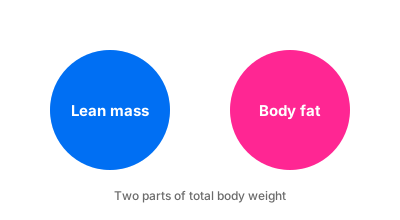
To obtain a real, holistic, and accurate medical x-ray of your current health status, we must inevitably look past the raw number on the scale and deeply analyze your body composition. The total weight of your body, that number that frustrates you every morning, is actually the sum of several distinct biological compartments:
Lean Mass (Muscle and Bone)
Includes your skeletal muscles, bone density, vital organs, intra and extracellular water, and connective tissues. Modern science no longer considers muscle as a mere locomotive tissue, but as the largest endocrine organ in the entire human body.
Muscles act as powerful"sinks" that absorb glucose in the blood. The more lean mass you have, the better your natural insulin sensitivity will be, the higher your Basal Metabolic Rate (BMR) will be, and the more calories you will burn passively while sleeping or watching television.
Fat Mass (Adipose Tissue)
Refers to the total sum of adipose tissue. Although fitness culture and social media fiercely demonize any percentage of fat, it is a biological imperative to understand that a basal level is absolutely critical for life.
Fat reserves regulate the synthesis of steroid hormones (testosterone, estrogen), orchestrate thermal insulation, sustain the architecture of cell membranes, and serve as the organism's largest and most dense long-term energy store to prevent starvation.
💡 Medical Paradigm Shift: The most advanced clinical interventions today have abandoned the obsolete concept of"weight loss" in favor of"body recomposition." The supreme goal is to optimize physiology by exclusively losing fat mass while maintaining, protecting, and promoting the growth of lean muscle mass.
4. Ideal Body Fat Percentages (Evidence-Based Guide)
Once we accept the severe limitations imposed by BMI, calculating your body fat percentage stands as the ultimate and definitive metric of true metabolic health. It is vital to emphasize that healthy clinical ranges vary massively depending on sex. Women, mandated by their evolutionary genetic design and the complex energy demands of the reproductive system (preparation for pregnancy and lactation), biologically require a significantly higher body fat percentage than men to sustain a healthy hormonal profile and regular menstrual cycles.
Physiological Ranges for Men
- 2% - 5%Essential Biological Fat
The absolute minimum for internal organ survival. Only temporarily achieved by bodybuilders on competition day. Extremely dangerous and unsustainable long term, causes drastic hormonal drops.
- 6% - 13%Elite Athletes
Presents extreme muscle definition, striations, and highly visible vascularity (prominent veins). Common in sprinters, gymnasts, and professional fighters.
- 14% - 17%Healthy / Fitness Range
The clinical"sweet spot". Offers the best possible balance between excellent metabolic health, abundant vital energy, high testosterone levels, and an aesthetic, toned appearance.
- 18% - 24%Average Acceptable Range
Considered a normal level for the average adult man, although if at the upper limit, preventive medical guidelines would suggest a slight reduction to optimize blood markers.
- > 25%Metabolic Obesity
Levels that significantly trigger systemic inflammatory risk and the probability of chronic cardiovascular diseases.
Physiological Ranges for Women
- 10% - 13%Essential Female Fat
The basal level. Dropping below this critical threshold almost certainly triggers severe dysfunctions like amenorrhea (total loss of the menstrual cycle) and an alarming drop in estrogen.
- 14% - 20%Professional Athletic Level
High muscle definition and severe toning. This is the physical state typically maintained by Olympic high-performance athletes and CrossFit competitors.
- 21% - 24%Optimal Healthy Range
The perfect balance for the vast majority of women. Guarantees robust hormonal health, protected bone density, fertility, sustained energy, and a slim yet healthy aesthetic.
- 25% - 31%Daily Acceptable Range
A statistically average level that is clinically accepted as healthy. The body functions correctly without significant metabolic stress markers.
- > 32%Obesity Risk
Threshold beyond which excessive adipose tissue detrimentally alters peripheral insulin resistance and increases a chronic low-grade inflammatory state.
5. Why Your"Ideal Weight" Should ALWAYS Be a Dynamic Range
One of the biggest psychological and physiological mistakes in the wellness and fitness world is obsessing unhealthily over hitting a static"target number." Harmful thoughts like "I will only be happy and healthy when the scale reads exactly 143.0 lbs" completely ignore the most basic principles of human biology.
Your body is not an inert block of matter; it is a living, complex biological ecosystem in constant dynamic homeostasis. Your actual weight, measured to the gram, will inevitably fluctuate on a daily basis, and will even undergo variations from morning to night, heavily influenced by multiple physiological variables:
- 💧 Glycogen Storage and Water Retention Science shows that for every gram of carbohydrates (glycogen) your muscles and liver jealously store as primary energy, your body obligatorily retains approximately 3 grams of intra and extracellular water. A pasta-rich dinner can make the scale go up by 3 pounds the next morning. Don't panic, it is biologically impossible that you gained 3 pounds of pure fat overnight; it is simply hydration and stored energy.
- 🦴 Bone Density and Skeletal Structure (Frame Size) Human morphology varies enormously. People with wider clavicles, thick wrists, and dense femurs (large frame) will genetically and naturally weigh more than someone of the exact same height but with a more fragile or narrow bone frame.
- 🩸 Female Hormonal Fluctuations The menstrual cycle exerts absolute control over short-term weight. In the luteal phase, before bleeding, the peak in certain hormones like progesterone can cause severe physiological fluid retention ranging from 4 to 8 pounds of"ghost" weight.
Clinical Verdict: Science recommends establishing a loose healthy weight range, with a 4 to 8 pound margin of oscillation, rather than a fixed and immobile goal. This provides indispensable mental flexibility, drastically reduces the anxiety related to daily weighing, and maturely and accurately reflects how normal human physiology truly works.
6. Scientific Step-by-Step Guide to Reaching Your Ideal Range
If after taking your measurements you conclude that you are outside your healthy weight range, or have a detrimentally high body fat percentage, take a deep breath. You do not, under any circumstances, need to resort to extremely restrictive diets, miracle shakes, or punish yourself with exhausting routines. Human cellular physiology responds infinitely better to consistent, structured, mathematical, and prolonged changes over time.
Master the Supreme Law of Energy Balance
The First Law of Thermodynamics (the conservation of energy) unquestioningly dictates that to lose fat mass, you must inevitably be in a caloric deficit (consistently expending more thermal energy than you consume through food). It absolutely does not matter if you practice the strictest intermittent fasting, the ketogenic diet (keto), are a strict vegan, or eat six times a day; if you are not mathematically in an energy deficit, you will not lose a single gram of real fat.
The imperative step is to use an accurate algorithmic calorie calculator to establish your Total Daily Energy Expenditure (TDEE). From there, you must create a moderate and safe deficit (reducing your intake by approximately 300 to 500 calories daily). This conservative level guarantees a pure and sustainable fat loss of about 1 pound per week without triggering the biological starvation responses that slow down your metabolism.
Strategically Prioritize Daily Protein Intake
Protein is not just the building block of muscles; it is the most important architectural macronutrient for human survival. Scientific literature fervently recommends consuming between 1.6 and 2.2 grams of pure protein per kilogram of total body weight due to its triple positive metabolic effect:
- Anti-catabolic Effect: Preserves your valuable skeletal muscle mass during the arduous process of a caloric deficit, forcing and ensuring that the weight lost by the body comes almost entirely from your adipose tissue stores and not from lean tissue.
- Thermogenic Advantage (TEF): Possesses the highest Thermic Effect of Food of all macros. Your body literally burns up to an astonishing 25-30% of the calories contained in the protein itself simply in the intense digestive process required to break it down into amino acids.
- Appetite Suppression: Maximizes the neuronal satiety signals in your brain, keeping ghrelin (the famous hunger hormone) fiercely at bay and making your nutritional program infinitely easier to tolerate and maintain in the long run.
Strength and Resistance Training is Completely Non-Negotiable
The most tragic and widespread mistake in traditional weight loss phases is doing endless hours of boring moderate cardiovascular exercise without ever touching a heavy weight. Hypertrophy or strength training (whether through structured lifting of free weights, complex calisthenics exercises, or the use of high-tension resistance bands) sends a powerful and primitive anabolic signal to the central nervous system: "I desperately need to maintain this valuable active muscle to survive and handle the loads of my environment".
This preventive mechanical stress signal is the only known mechanism to completely avoid the muscle atrophy and loss induced by the inevitable caloric deficit of the diet. Light cardiovascular exercise is undoubtedly an excellent complementary tool for the comprehensive health of the circulatory system, the heart, and to slightly increase your daily caloric deficit, but intense weightlifting is the true hammer that sculpts your body, molds your figure, and transforms your deep body composition forever.
Rigorously Optimize Sleep Hygiene and Clinical Stress Management
Believing that you can sacrifice hours of sleep without paying a metabolic toll is a fallacy with fatal consequences. Systematically sleeping less than 6-7 deep hours a night biologically sabotages all your hard efforts at body recomposition, no matter how strict your diet is or how intense your morning training is.
Chronic deprivation of good restorative rest acutely destroys your body's cellular insulin sensitivity, significantly lowers testosterone and incretin levels, and above all, chronically elevates your basal levels of cortisol (the well-known acute stress response hormone). A biological environment flooded with circulating cortisol actively and biologically favors the rapid storage of stubborn fat, particularly the dangerous visceral fat accumulated in the abdominal region, while simultaneously increasing and exacerbating purely neurological cravings for hyperpalatable ultra-processed foods (high in addictive combinations of simple sugars and trans fats).
7. Dangerous Myths About Weight, Obesity, and Health
The monstrous multibillion-dollar industry of extreme fad diets and fat-burning supplements has, for profit, perpetuated atrocious myths that terribly confuse the population, discourage, and ultimately impede the progress of millions of well-intentioned people. Let's scientifically and forever debunk the most destructive ones, firmly relying on modern clinical evidence.
Myth:"Carbohydrates, especially at night, block fat burning and make you instantly fat."
False. The Scientific Reality: No isolated macronutrient possesses the magical or esoteric power to create adipose tissue out of absolute nothingness, breaking elementary physics. The famous pseudoscientific"carbohydrate-insulin" model of obesity development has been extensively and systematically debunked in a humiliating manner in multiple and rigorous isolated and highly controlled metabolic trials in closed metabolic wards. The chronic, prolonged, and inexcusable excess of total ingested calories (regardless of their dietary origin) is the sole and exclusive biological culprit that your body will use to synthesize and store excess surplus energy in the form of fat cells (adipocytes). In fact, complex carbohydrates (like whole oatmeal, rice, and nutritious tubers like potatoes) are absolutely the preferred and fastest-access fuel for your demanding brain and muscles during truly intense physical training.
Myth:"You can do specific and localized repetitive exercises to quickly burn stubborn belly fat."
False. The Scientific Reality: Medically known as the delusion of"spot reduction," this is one of the oldest and most profitable commercial myths in teleshopping. You can stoically subject yourself to methodically performing a thousand daily crunches or torturous abdominal exercises; you will undoubtedly immensely hypertrophy and strengthen the powerful wall of underlying core muscle tissue that is under your skin, but you will never, under any natural biological circumstance, magically make your body oxidize, or"burn," preferentially that stubborn layer of fat tissue located right above the worked area. Your immutable personal genetic map, heredity, and your endogenous hormonal profile dictate in what strict and predetermined biological order your body is forced to mobilize fatty acids in pure systemic and global biochemical response to a severe generalized caloric deficit sustained over the long term.
Myth:"Sweating excessively with neoprene belts on treadmills unequivocally equates to losing and melting a large amount of body fat."
False. The Scientific Reality: Absurdly wrapping your body like a gift in suffocating plastics to train, wearing double thermal sweatshirts in summer, or simply spending three arduous hours straight in the suffocating heat of a sauna will never burn a single extra gram of body fat on its own. Sweat is, plain and simple, the efficient, rudimentary, and ancient biological mechanism of extreme emergency thermoregulation of your primary system, evolutionarily designed to rapidly cool the skin through evaporation and prevent your certain death from critical organ overheating. This fluid expelled through your pores is composed almost exclusively of water and tiny traces of basic vital electrolytes (like sodium and potassium). The exciting and rapid acute drop in magical weight that you emotionally see momentarily reflected on the cold scale in the locker room right after leaving the sauna is the purest acute dehydration; there is no magic; every milligram of this lost"sweated weight" will return, aggressively and completely recovering, instantaneously and obligatorily the exact second you simply properly rehydrate your cells by drinking a simple and necessary glass of water.
Detailed Frequently Asked Questions (FAQ)
Is it possible to be metabolically healthy if my BMI says I am overweight?
Yes, absolutely and scientifically documented. This is often termed"metabolically healthy obesity," although in the case of active individuals, it is due to high lean muscle mass. If your cardiovascular markers (LDL/HDL cholesterol, triglycerides, fasting glucose, insulin sensitivity, and blood pressure) are completely optimal, and your actual body fat percentage (measured) is firmly anchored within athletic or healthy ranges, a high BMI derived exclusively from muscular hyperdevelopment poses zero clinical risk to your life expectancy.
How often should I really step on the scale to check my recomposition progress?
Constant daily weighing can generate enormous psychological fatigue in a high percentage of individuals due to logical erratic fluctuations (water retention and digestive cycle). Expert nutritionists strongly recommend weighing yourself only under identical and strict biological and environmental conditions: completely fasted, right after the first morning bowel movement/urination, always wearing no clothes, and performing this check exactly 1 or 2 strict times a week, noting the weighted average over the prolonged monthly period to discern the true trend of the physical change.
How does the so-called"bone constitution," or the size of my skeleton, affect the medical goals of healthy weight ranges?
Although standardized BMI estimates are rudimentarily designed to offer a good approximate fit for the vast general populations of individuals, they ignore biological exceptions. People genetically endowed with unusually wide shoulder girdles, long femurs, and highly thick joints will logically present significantly higher structural weights than others of their exact height. It is for this and no other reason that truly sophisticated clinical models strongly advise focusing patients' diagnostic resources on their exact proportions of fat and muscle tissue hypertrophy as infinitely superior metrics of objective long-term health, relegating statistical BMI to a second and less vital step of importance in serious consultations.
Ready to calculate your exact numbers and transform your physique?
Leave guesswork, myths, and approximations behind once and for all. Use our advanced science-based tool right now to discover with astonishing clinical precision your daily caloric requirement, your true ideal target weight range, and the exact distribution of recommended macronutrients for you in a matter of a few seconds.
Science-Based Suggested Content For You
The Ultimate Guide to Caloric Deficits Explained
Learn the raw and proven science behind the first law of thermodynamics. Structure a safe and highly effective moderate deficit yourself that allows you to lose stubborn belly fat permanently. All this process achieved without sacrificing or unnecessarily destroying a single gram of your valuable and hard-earned lean muscle mass and without ever having to suffer and tolerate a severe state of perpetual psychological hunger.
Mastering and Intelligibly Understanding Basic Macronutrients
The most complete and enjoyable medical guide to read on the physiological structural synthesis of proteins, fats, and carbohydrates, demystified and explained with astonishing clinical rigor step by step. Discover the fascinating exact biological mechanisms that will tell you how to properly balance and interconnect them in a brilliantly intelligent way to achieve the absolute peak maximization of your daily cellular energy levels and your most dreamed aesthetic and visual physical results.