Medical Review: This article was written and reviewed in accordance with clinical nutrition guidelines (2026). Evidence-based content.
Understanding your maintenance calories is the absolute pinnacle of nutritional control. Whether you have just finished a grueling 6-month diet and want to lock in your weight loss, or you are an athlete looking to stay in a specific weight class, eating at maintenance is the ultimate state of biological equilibrium.
What Are Maintenance Calories and How Do You Calculate Them?
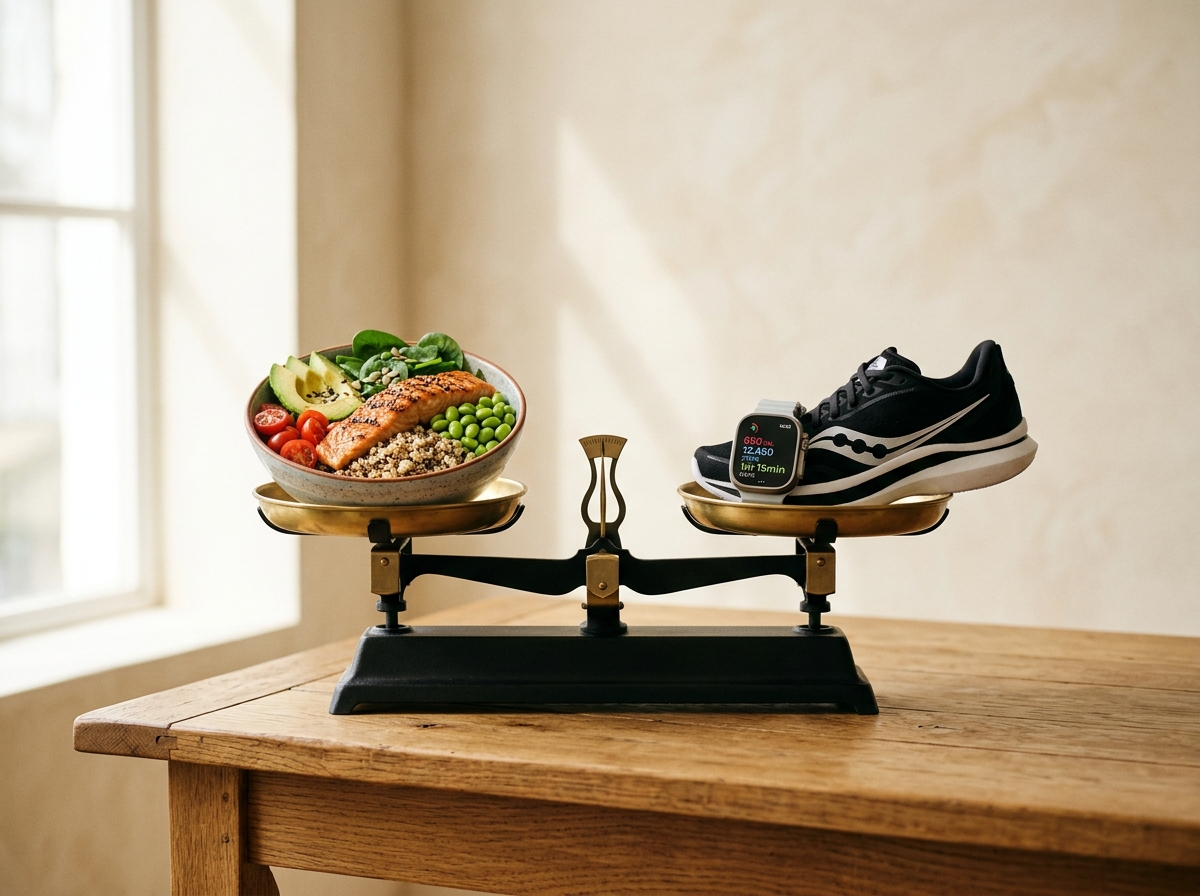
Maintenance calories represent the exact mathematical point where Energy Intake perfectly equals Energy Expenditure. In this state, your body neither stores new fat nor burns existing fat. Your body weight remains relatively stable.
Scientifically, your maintenance calories are identical to your Total Daily Energy Expenditure (TDEE). If you have never calculated this number, you must immediately use our maintenance calories calculator or TDEE calculator to establish your baseline.
The 4 Strategic Uses of Maintenance Calories in Fitness
Maintenance isn't just for people who are happy with their current bodies. It is a strategic tool used in multiple phases of fitness:
1. The Diet Break
If you are in a deep calorie deficit and hit a plateau, taking 2 weeks to eat at maintenance will reset your leptin hormones and metabolic rate.
2. The Rebound Prevention
After hitting a weight loss goal, immediately returning to your old eating habits guarantees weight regain. You must slowly transition to your new, lower maintenance calories.
3. Body Recomposition
Eating exactly at maintenance while lifting heavy weights allows beginners to simultaneously build muscle and burn fat—the holy grail of fitness.
4. Athletic Priming
Athletes leading up to a competition eat at maintenance to ensure glycogen stores are completely full without adding heavy body fat.
Why Did My Maintenance Calories Drop After Weight Loss? (Metabolic Adaptation)
A crucial fact to understand is that your maintenance calories are dynamic, not static. The number changes constantly based on your lifestyle and body composition.
| Event | Impact on Maintenance Calories |
|---|---|
| Losing 20 lbs of fat | Decreases Maintenance (You are lighter to carry) |
| Gaining 10 lbs of muscle | Increases Maintenance (Muscle burns calories 24/7) |
| Switching from retail to a desk job | Massive Decrease in Maintenance (Lower NEAT) |
| Aging 10 years | Slight Decrease (Natural lowering of BMR) |
Actionable Tips for Staying at Maintenance
- The 80/20 Rule: When eating at maintenance, you have more caloric freedom than when dieting. Spend 80% of your calories on highly nutritious whole foods, and enjoy 20% on treats. This prevents binge eating.
- Track Protein Rigidly: Even when at maintenance, you should still hit your daily targets. Use our protein calculator to ensure you don't lose the muscle you worked so hard to build.
- Monitor Weekly Averages, Not Daily Weigh-ins: Your weight will fluctuate daily based on water retention and sodium. Look at the 7-day average. If it remains flat, you are perfectly at maintenance.
Next Steps
If you're ready to transition out of maintenance and start a new fitness phase, you have two choices. To lean down for summer, calculate your new weight loss timeline. To bulk up and add muscle mass over the winter, check out our weight gain targets.
Ready to calculate your needs?
Use our free, science-backed calculator to find your exact calorie and macro targets.
Open Calorie Calculator